How modern parking actually works.
Operations, revenue, and the platform behind it — written by the operators who build it, not a content farm.
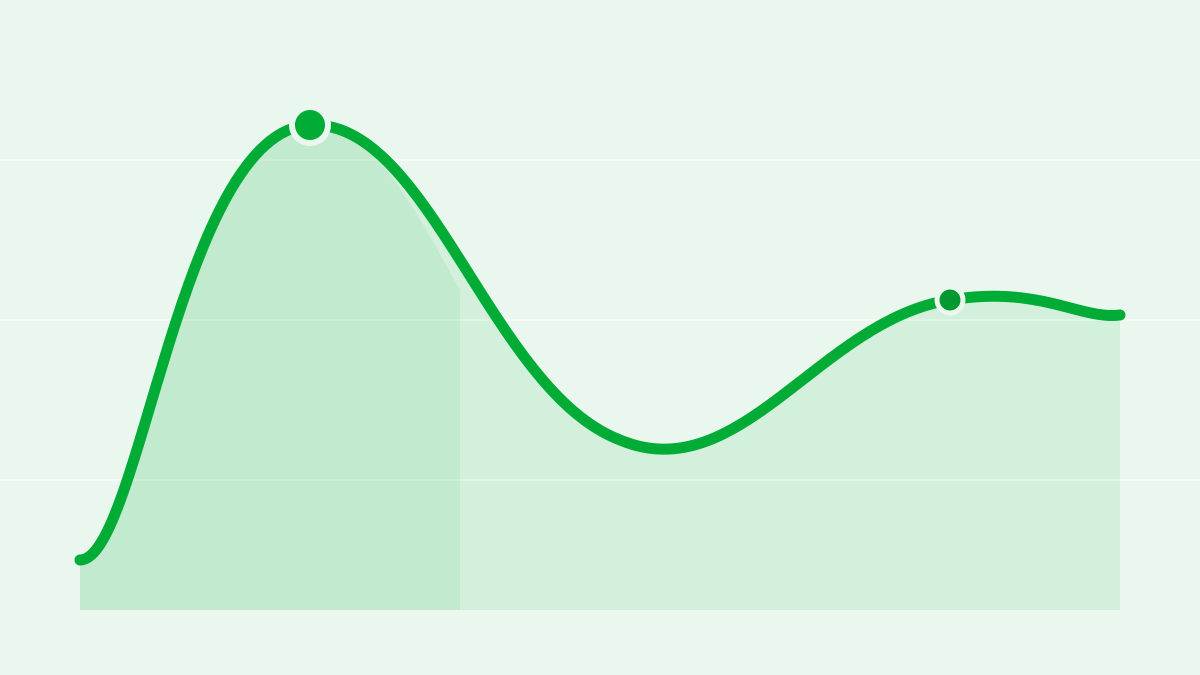
Why your parking rate is wrong twice a day
A flat hourly rate underprices the morning peak and overprices the midday lull. Both errors happen at the same lot on the same day. Time-of-day pricing fixes them at once.
Read →
Pittsburgh's active loading zone program ran for three years and produced hard data: 70% more turnover per zone, 60% shorter average dwell. Here is what that means for property operators.
Read →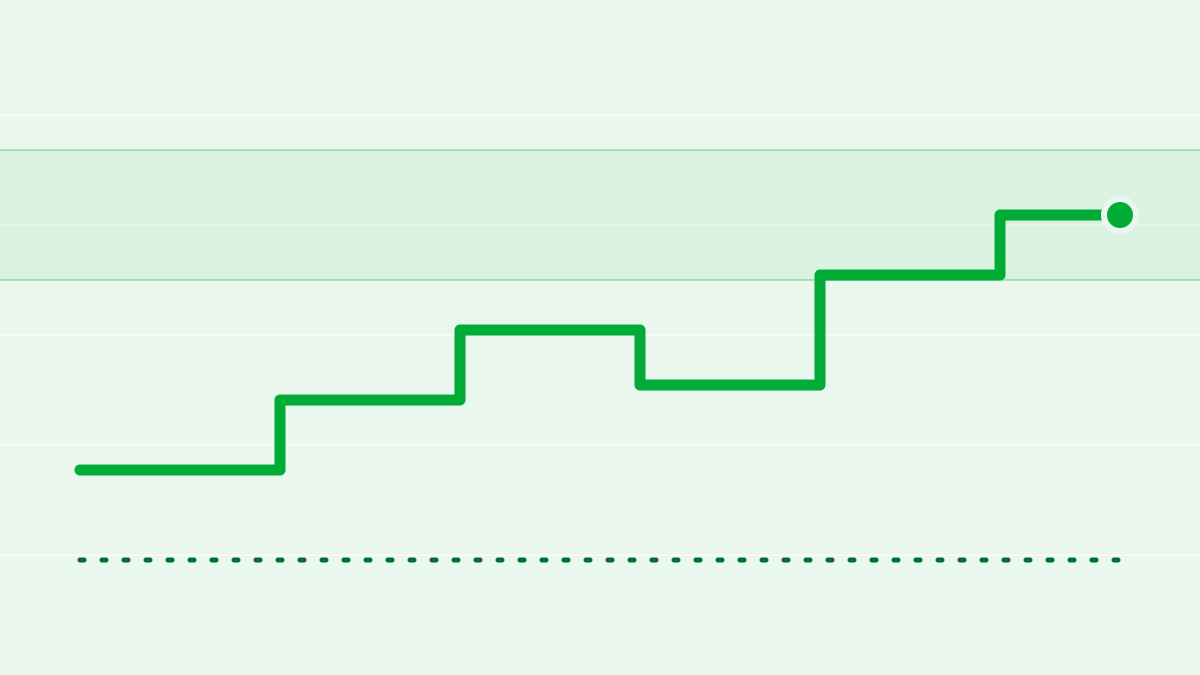
Flat-rate lots are underpriced at peak and overpriced in the lulls. Demand-responsive pricing fixes both — when it's run with a floor, a target range, and measured experiments.
Read →Parking minimums decided how many spaces you built. Nothing decided what to charge. That gap — between capital deployed and revenue captured — is the most consistent missed line on a multifamily P&L.
Read →Cities from New York to California are formalizing who gets the curb and when. For property operators, the real question is whether you write your own rules or inherit the city's.
Read →Gate arms feel like control. In practice they cap throughput, add maintenance, and still leak revenue. Here's what changes when the gate comes out.
Read →Dynamic pricing has a bad reputation it doesn't deserve. Done with a control group and a floor, it's a science experiment — not a gamble.
Read →Your drivers shouldn't need an app, a ticket, or a kiosk. Here's how plate-based parking works — pay from your phone — and why it lifts both experience and revenue.
Read →Plenty of parking gets sold as software that 'runs itself.' It doesn't — it just moves the work to you when it breaks.
Read →